Marcus Watson Jr. has participated in sports essentially since he was old enough to run, though maybe not always so resolutely — in football in particular — early on.
Central’s rising senior wide receiver, who recently committed to Houston, actually spent more than five years away from the game after a miserably cold youth-ball contest and was pulled again in a teaching moment in junior high.
But as he continued to develop physical traits such as his explosive burst that now make him a coveted Division-I prospect, his maturation as a young man taught by both sports and his support system has been an even more impressive and critical area of his growth.
And when his biggest adversity struck June 26, 2024, suddenly losing his father and namesake, “M.J.” managed to process his grief in a way that only drove him harder than ever to reach his goals they had discussed.
“When I found out the news when my mom told me, I was hurt,” he says. “He was my righthand man. I was talking to him about everything, every situation I had, when schools had interest in me or anything sports-wise, being a man-wise, thinking-wise, lessons learned, everything. Then after that, he was just sending me text messages of how he loved me and how he was proud of me and everything else.
“So I still, even when I’m down or I feel less motivated, I go look at the messages and what he said about me, how I’m gonna be on ESPN or he’s proud of me and everything else. So, I use the messages that he told me for motivations, which make me unbreakable. I feel like I’m unbreakable every time I read that or every time I’m going through that.”
PATIENCE
Lincoln Holland’s smiles are almost audible through the phone as she recounts milestones of her oldest son’s childhood — not only the early flashes of his special athletic potential, but the challenges from which he learned and ultimately bettered himself.
“One day had to be one of the coldest days we had, and M.J. had to be 8 years old,” she remembers of a couple years into his youth playing days. “It was freezing cold, and they won their little state tournament that day, and he was literally like, ‘I don’t want to play football no more. I want to play baseball and basketball only.’ So he played baseball and basketball up to his eighth-grade year.”
Even then, his return to the field was brief as Lincoln and her husband, Isa Holland, recognized a lesson their son needed to learn sooner than later.
“The second week of practice, he basically had a bad attitude, and we pulled him,” she said. “You can not have bad sportsmanship and play ball. And I think that was probably the best thing we ever did, because from that moment on, it taught him that just because stuff isn’t going your way, you can’t act a certain way. So when ninth-grade football came up, and he said, ‘Hey, I’m going back to play football.’ And we said, ‘OK, well you remember what happened eighth-grade year, so…’ And after that we didn’t have any more issues with that.”

Central wide receiver Marcus Watson Jr. poses with mother Lincoln Holland after a game. (Photo: Courtesy of Marcus Watson Jr.)
Lincoln and Isa, who coached Marcus in basketball and baseball from elementary school into high school, saw his athleticism standing out among his peers at times in those sports well before they knew if he’d return to football.
Isa maintains Marcus is actually an even better baseball player than football and told Isa as early as seventh grade that he had the potential in one sport or another that, “man, if you take this serious, you can go somewhere with it.”
Even after several years of layoff, Marcus immediately looked the part upon his return to football in ninth grade.
Central wide receivers coach Gregg Morris remembers the first time he saw Marcus running one-on-one drills, raw as could be, but blowing by one defender after another or another instance in summer-league basketball in which the springy young athlete hit his head on the backboard.
“As far as football, I would say watching him develop in his ninth grade year, playing ninth-grade ball and seeing him be so dominant, it was like, ‘Oh, he’s got it. He’s got what it takes to where if he takes it seriously he could go somewhere,'” Isa says. “Ninth grade, he returned punts and kickoffs. And starting out, his first couple of returns were touchdowns against big schools. Not even like, ‘Oh, these are small programs.’ These are Catholic, Zachary, and there was another one. And I was like, ‘Whoa, hold on, there’s something there football-wise. And watching him, you don’t see ninth-graders be able to track the ball on deep passes, and seeing him be able to do that was like, ‘OK, this is it. Stick to football.'”
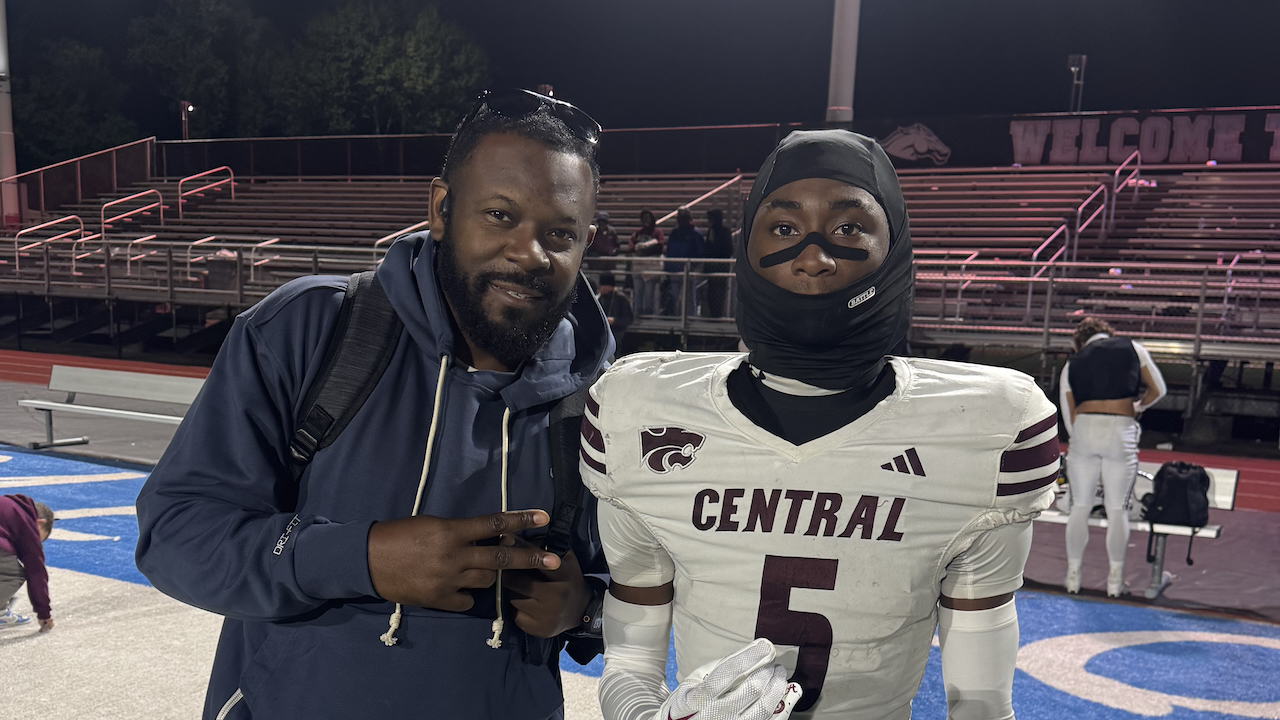
Central wide receiver Marcus Watson Jr. poses with stepfather Isa Holland after a game. (Photo: Courtesy of Marcus Watson Jr.)
The more his parents and coaches recognized that ability, the more confidence Marcus gained in himself.
And as he saw older players he knew in the area earning college opportunities, he lasered in on the same goal for himself.
“I was making plays, and my coaches were telling me I could be something, having meetings with the coaches and I was just getting noticed from a lot of people, and they kept telling me, ‘Keep going, keep going,’ so I’m like, ‘I’m actually doing something great,'” he says. “People being motivated around me made me into the person I am today, which made me motivate myself into being the best version of me.
“The younger me, I was thinking, ‘Just play football.’ It wasn’t a outcome. Just go have fun… Then I started getting a little older in high school, and it was like, ‘I’m actually doing something. I actually can do this.’ And I started seeing people getting scholarships from here and there, and I was like, ‘I want one. So I’m trying my hardest to get one.'”
PERSEVERANCE
While the athletic profile was coming into focus as quickly as he put on the Wildcats’ uniform, other elements of the program’s culture emphasizing the importance of open and honest communication, including from an emotional standpoint, took more time.
“I think one of the biggest areas of growth he’s had is how he handles adversity,” Morris says. “When we first got him, it was more of ‘I want to coach him hard, but I need to find his breakpoint. I need to find out what makes him tick. I need to find out what motivates him.’ And he was so closed off … We teach being truthful, but doing it in a loving way, and part of that is being vulnerable, part of that is opening up and part of that is admitting, ‘Hey, I need help’ with whatever’s going on. And he’s opened up to that.”
July 26, 2024, presented about as much of a shock to the system as imaginable when Marcus Watson Sr. died during an emergency surgery in Texas to remove a grapefruit-sized tumor in the back of his brain doctors had finally discovered after years of not being able to identify the cause of his nagging, painful headaches.
“The boys didn’t have much time to know what was going on,” Lincoln explains. “He called them, and realistically, he was saying his goodbyes. His best friend who was there told me he told him he wasn’t gonna make it. He told (M.J. and his little brother) he had to have surgery, but they didn’t know the risk that he wouldn’t make it. He told them he loved them and to do what you know to do, and I think that was kind of his way of smoothing it over.”
The loss of a parent could have derailed many student-athletes or forced them to retreat further inside their own walls.
But, with the help of the support system around him and the earlier lessons learned, Marcus gradually found a way to channel his emotions into deepening his connections and strengthening his resolve to carry his and his father’s name on to the goal of playing at the next level.

A young Marcus Watson Jr., the Central wide receiver and Houston commit, and father Marcus Watson Sr. (Photo: Courtesy of Marcus Watson Jr.)
“I remember that day and getting a text from him telling me what happened and everything, and I remember asking him, ‘Are you OK? What can I do?’ and he says he’s OK,” Morris says. “And like I said earlier with how closed off he was, he struggled with that for a little bit and struggles with that every so often still, I would say. Like there was a game that we had, and we’re in our pregame meeting room, and I see he’s not being who he normally is. He’s kind of back to the old, ‘I’m gonna keep things bottled up,’ and, I mean, he’s doing what our society teaches young men to do: Bottle things up, and don’t show emotions. And I sent him a text because I didn’t want to bring attention to it, and I was like, ‘Hey, bro, are you OK?’ And he tells me that he’s thinking about his pops.
“But he uses those texts and those memories, and he’s got a lot of people in his corner between his mom, his step-dad and everybody like that, both little brothers and all of us coaches. He has everybody in his corner. And when old Marcus would’ve said, ‘I’m good,’ and he’s not gonna talk about it, he was able to open up. And that shows the growth of the young man that he’s becoming, being able to open up and just simply say, ‘No, I’m not OK, I’m struggling,’ and us be able to be there to help him out.”
Marcus has paired that great trust and those bonds both on the field and behind the scenes with an increasingly relentless work ethic always seeking extra work whether at school, with independent trainers or in camp settings.
And he has continued to become not only a bigger playmaker for the Wildcats the past two years, but a bigger leader.
College opportunities began to follow, too, with South Alabama offering first in November and then Cincinnati, Houston, Tulane and North Texas all following in rapid succession in March.
“That (loss) was definitely a big moment for him,” Lincoln says. “But I think that that pushed him even more so to do better than what he was originally doing and I think it just took him to a whole different level. He still even now has days, like everybody, and you’ll see he’ll post his dad on social media and things like that. But for the most part I think it’s one of those things that he uses it as motivation of, ‘Hey, I’m doing this for my dad.'”
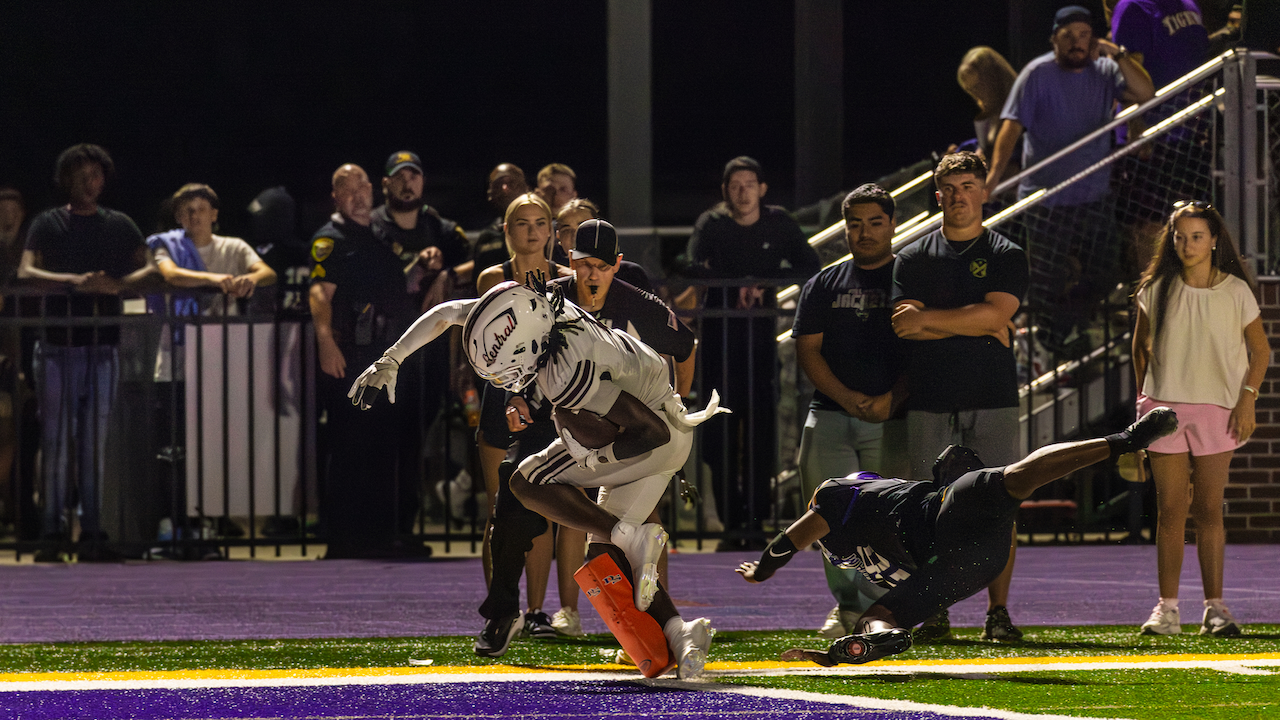
Central wide receiver Marcus Watson Jr. scores a touchdown Sept. 12, 2026, at Denham Springs. (Photo: Courtesy of Marcus Watson Jr.)
PURPOSE
The height of the recruiting process this winter and spring has epitomized to Isa and Lincoln the growth that Marcus has continued to exhibit.
They researched each school that communicated or hosted him and took trips with him throughout the past two years, but Marcus has taken charge more than ever before in his relationships with the coaches and his weighing of options toward an ultimate decision.
Lincoln admits, “Momma has definitely babied him,” as she notes the bittersweet emotions of seeing her baby boy becoming independent and preparing to branch out.
“I’m the big push for ‘leave him alone, let him figure it out,’ and momma is the push for ‘no, we’ve still gotta handle it right now,’ but then here lately, it’s just been like, ‘Nope,'” Isa says. “I can definitely say just in the past six months the level of maturity and the level of responsibility that he’s displayed and he’s taken has been amazing. It’s been crazy just to see him grow in that aspect. I’ve been very hard on him and very critical of him, and just to see him step up to the plate and be able to grow has just been amazing. It’s been a shock actually.”
Marcus quickly felt a connection with the Houston staff and a fit in their program from the offer March 12 to a visit March 28 and a commitment announcement just a week later April 3.
“The staff was treating me like I was at home already,” he says. “When I visited and they were showing me everything, I liked everything, the tour and everything I went to when I got there. The wide receiver coach, coach (Brian) Bell, he showed me a lot of love too. And when I talked to coach (Willie) Fritz, he was showing me love as well. The staff made me feel at home, basically, and I really loved the way they treated me.”
He planned to wait until June 26 to announce a college decision in honor of Marcus Sr.
“But I just felt something, like, ‘This is the moment,'” he says. “After I was reading the message of him saying how he was proud of me, I said, ‘I think the moment’s right now.’ I knew in that moment he was proud of me, and in that moment it felt like he just told me, ‘Just do it.’ So I just did it. And it made me excited, and I know he’s excited for me and the opportunity and being thankful about me being the person I am right now.”
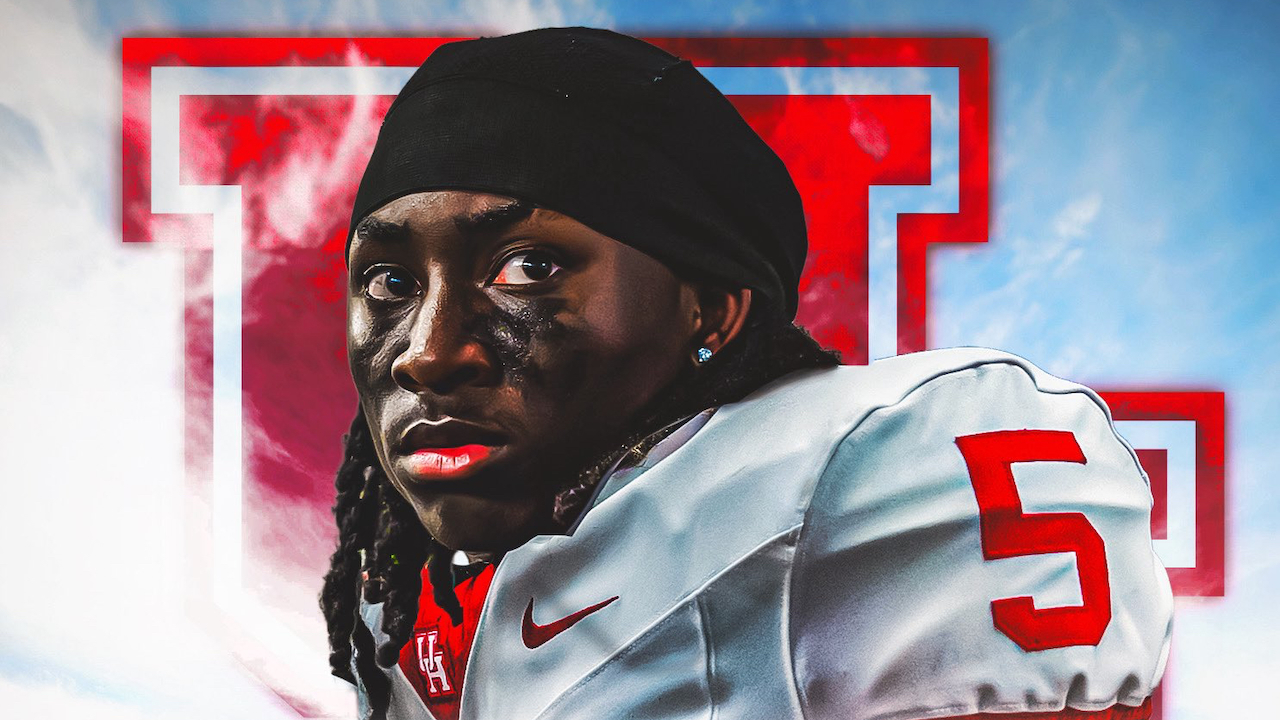
Central wide receiver Marcus Watson Jr. announced his commitment Friday, April 3, 2026, to Houston. (Photo: Houston commitment graphic)
Marcus says hearing his — and thus also his father’s — name when he makes plays in college stadiums will “feel great. Like every time I score or make a play, it’s gonna give me a flashback kinda.”
He says he already thanks his dad after plays he makes for the Wildcats and is eager to carry that forward and realize their dream of him succeeding at the next level.
But Marcus Sr. is also far from the only person his son is grateful to represent and make proud.
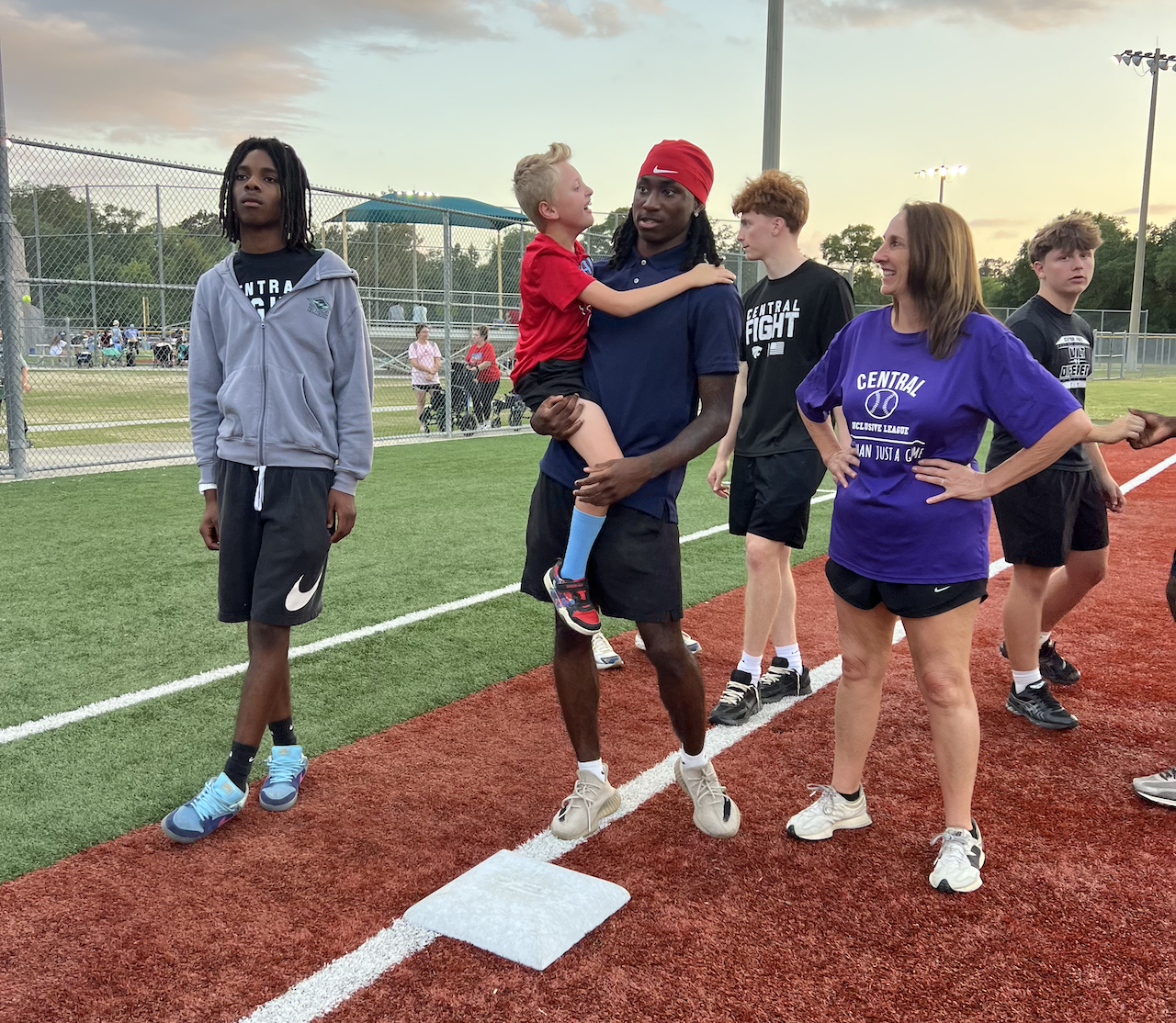
“One thing I will say that I’ve learned about Marcus these last two years is that he loves kids,” Lincoln says, as she and Isa share stories about Marcus providing rides for fellow students, umpiring little-league games and working the Central Inclusive League for children with physical or developmental disabilities a safe experience to play baseball.
“He’s done it the last three years, and he loves it,” Isa explains further on the baseball league. “And every (Central High) team has a day they go out there, but last year he did the whole week, and this year he did the same thing… If I had to rely on somebody to watch a kid, it would definitely be him. I would leave anybody’s child with him and know they’re gonna be OK. He loves kids, is very family-oriented and is the big brother to anyone he’s around. He’s the neighborhood’s big brother for all the little kids around.”
Morris says “it speaks volumes to who he has become” the role model Marcus now is to the community’s youth, including his own son whose coach-pitch games Marcus has umpired.
Marcus says he’s just happy to pay forward the support he’s felt through the years, including helping him navigate loss, find his path and position himself to realize his and his family’s dream of taking athletics to a college education.
“I try to give the younger people or even people my age the motivation that my people gave to me,” he says. “So I try to make sure that everyone around me is OK and going well… The younger group, it’s crazy how younger kids come up to me and ask me about different things, and I just enjoy helping kids and helping other people. I know less people have got the opportunity I’m in today, and I’ve been blessed for this opportunity actually, so I try to help the community the best way I can with helping with the baseball league or picking people up and dropping people off. Making other people’s life easier just makes me feel like a better person.”